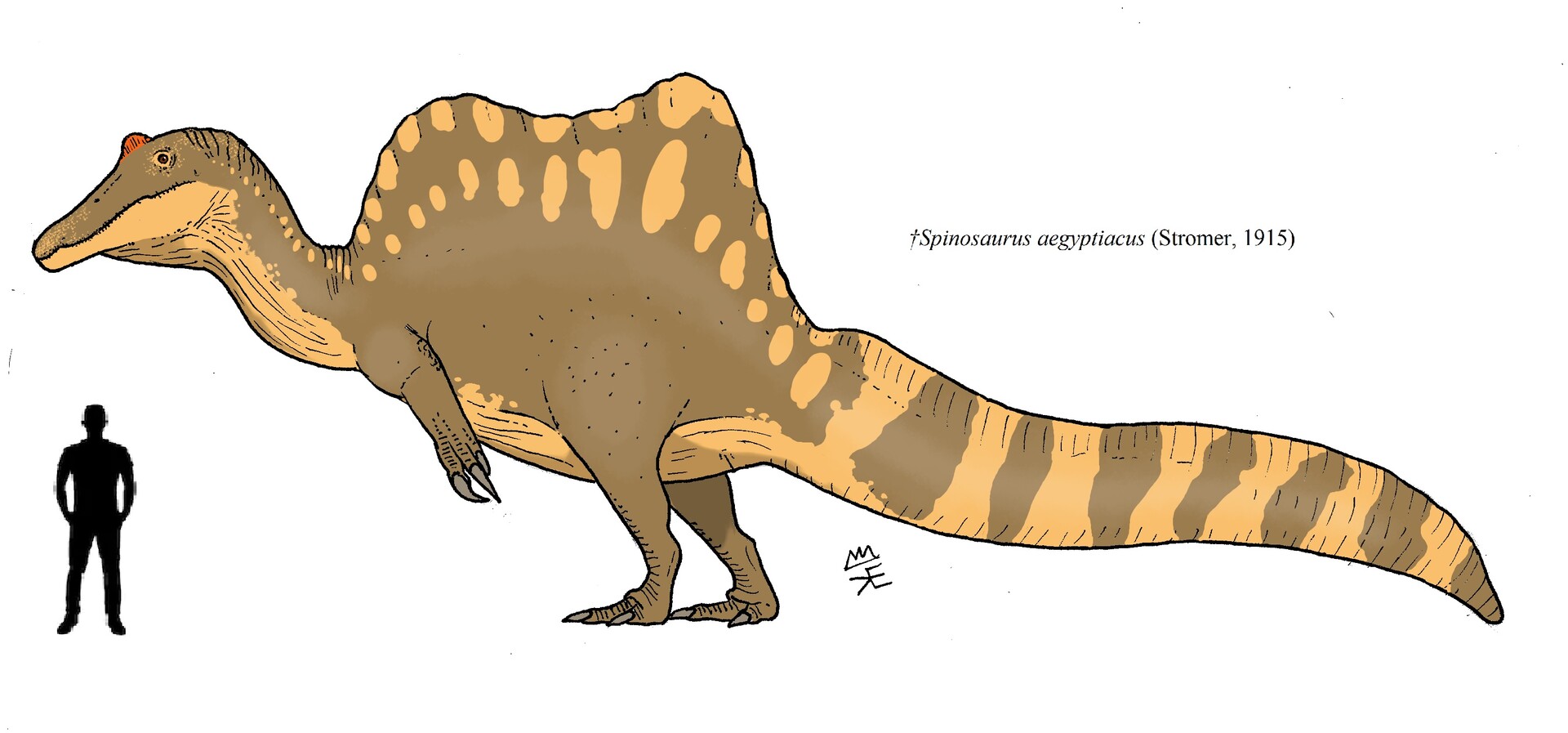
Spinosaurus aegyptiacus
One of the most famous and largest of the theropods, Spinosaurus has a complicated restorative history. It was initially looked at as an Allosaurus-like Carnosaur when it was first discovered, albeit larger and with a large sail on its back. Later discoveries of actual close relatives such as Baryonyx helped to paint a clearer picture of Spinosaurus; a long-snouted predatory theropod that seemed to have preference toward fish and other aquatic prey. These became known as the Spinosaurids. Despite giving its name to the family, Spinosaurus was still a little known, odd member of the group with not much to go on (the original specimen was displayed in the Bavarian State Collection of Paleontology and then destroyed during a WWII bombing raid in Germany in 1944). Since the 2010s, new fossil evidence gave further insight to the biology and anatomy of Spinosaurus, after several specimens were published; including juveniles. Newly discovered features included shortened hind-limbs, long neck, and a long paddle-like tail. It is known to have had ties to water; as many Spinosaurids seem to have, though various studies came to different interpretations to its exact lifestyle; from fully-aquatic swimmer to semi-aquatic wader. Current thinking suggests a huge, heron or stork-like predator that may have waded in shallow water and had a preference for aquatic prey; though evidence from close relatives Baryonyx and Irritator suggest Spinosaurids weren't picky eaters either. Remains of Spinosaurus come from Late Cretaceous deposits in Egypt, Morocco, and Tunisia (and possibly Brazil, depending on the status of relative Oxalaia).